
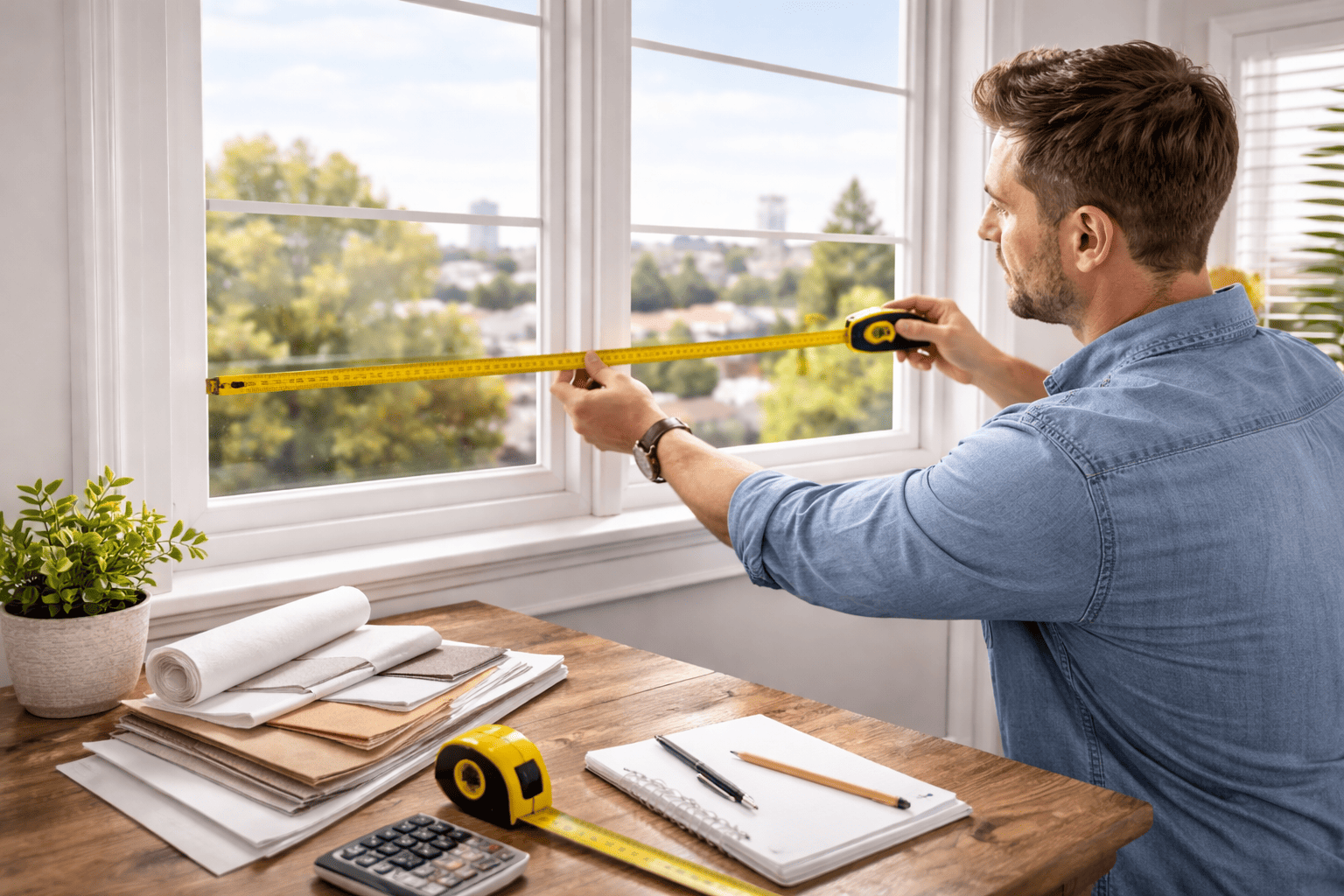
Ordering custom window coverings should feel exciting, not stressful. But for many homeowners, one of the first questions is simple and important: how do you measure the windows properly?
The short answer is that measuring depends on the type of product, the mounting style, and the window itself. Even a small measuring mistake can affect fit, privacy, operation, and overall appearance. That is why it helps to understand the basics before you order or book an in-home consultation.
This guide walks through what homeowners should know before measuring for custom window coverings in Vancouver homes.
Why measuring matters so much
Custom products are designed around your actual window dimensions. That means accuracy matters. A product that is even slightly off can lead to:
- side gaps
- poor privacy
- awkward stacking
- operation issues
- an unbalanced visual look
- disappointment after installation
Good measuring supports better function and a cleaner final result. It also helps you have a more productive conversation during a consultation because you already understand the layout and challenges of the window.
First, understand inside mount vs outside mount
Before taking measurements, you need to know the difference between the two most common mounting styles.
Inside mount
An inside mount fits within the window frame. Many homeowners like this because it looks clean and tailored.
It is often chosen when:
- the window frame has enough depth
- you want a more minimal look
- you want to show off trim or architectural details
Outside mount
An outside mount sits outside the window frame, usually extending beyond it. This can be useful when:
- the frame is too shallow for an inside mount
- you want better coverage and fewer side gaps
- the window shape or trim makes an inside fit difficult
- you want the window to appear larger visually
The right mounting style depends on the room and the product. One is not automatically better than the other.
What tools you need
You do not need much, but you do need the right basics:
- a steel measuring tape
- a pencil
- paper or notes app
- a step stool if needed
- good lighting
Do not rely on a fabric measuring tape. Use a rigid measuring tape for better accuracy.
How to measure for an inside mount
If you are considering an inside mount, measure the width in three places:
- top
- middle
- bottom
Then measure the height in three places:
- left
- centre
- right
Why measure three times? Because many windows are not perfectly square. Even in newer homes, there can be slight variation.
For width, use the narrowest measurement.
For height, use the longest measurement.
Also check the depth of the frame. Some products require a minimum depth for proper installation and flush fit.
This is especially important when homeowners are considering Blinds Vancouver options that sit within the frame and need clean alignment.
How to measure for an outside mount
For outside mount, measure the area you want the covering to span, not just the glass.
This usually means:
- measuring the full desired width, including extra coverage beyond the frame
- measuring the full desired height based on how high and low you want the product to sit
Outside mounts can help reduce light gaps and improve privacy. They can also make a small window feel more substantial visually.
The exact overlap can vary depending on the product, the window location, and how much light control you want.
Why window depth matters
Many homeowners focus only on width and height, but depth matters too. If the frame is too shallow, an inside-mounted product may not sit properly.
This does not mean the window cannot have a custom solution. It simply means the mounting style or product choice may need to change.
A professional consultation is especially helpful when window depth is limited, trim is decorative, or the frame has hardware or obstructions.
Measuring for rooms with privacy concerns
If the room faces neighbours or the street, measuring is not just about fit. It is also about coverage.
For privacy-focused rooms such as bedrooms, bathrooms, and front-facing living spaces, even minor side gaps can matter. In those cases, the choice between inside and outside mount can significantly affect the final result.
This is one reason homeowners comparing Shades Vancouver options often benefit from more than just raw measurements. The functional goal of the room matters too.
Common measuring mistakes homeowners make
Measuring only once
Always measure more than once. A single measurement can hide uneven framing.
Rounding too early
Write down the exact measurement first. Do not simplify it right away.
Measuring only the glass
For many custom products, the frame and surrounding area matter just as much as the glass.
Ignoring trim, handles, or cranks
Window hardware can interfere with fit and operation.
Forgetting how the room is used
A technically correct measurement still needs to align with privacy, light control, and furniture layout.
What about extra-wide or extra-tall windows?
Large windows often need more thoughtful measuring and product selection. Weight, stacking space, operating method, and light gaps all become more important.
A wide living room window may look simple at first glance, but it may need to be divided into sections or paired with a specific control method. This is one area where a professional recommendation can save homeowners from expensive missteps.
What about bay windows, corner windows, or unusual shapes?
Not every window is straightforward. Some homes have:
- bay windows
- angled windows
- corner windows
- extra-deep sills
- arched features
- skylights
These situations require more planning, because the product needs to work with both the architecture and the room’s daily use.
For overhead windows in particular, Skylight Solutions require a different level of planning than a standard bedroom or living room window. Access, control method, and light intensity all matter.
Should you measure before or after a consultation?
It is helpful to have rough measurements before a consultation, especially if you are in the early planning stage. It gives you a better sense of your home and the scale of the project.
But if you are ready to order a custom product, final measurements should be precise and tied to the chosen product and mount style. A window that seems suitable for one style may need a different approach once the details are reviewed properly.
Think of your own measuring as preparation, not always the final word.
A simple measuring checklist
Before moving forward, make sure you have:
- identified whether you are considering inside or outside mount
- measured width in three places
- measured height in three places
- checked frame depth
- noted any handles, trim, or obstructions
- considered the room’s privacy and light needs
- flagged any unusual windows
This checklist alone can help homeowners avoid some of the most common mistakes.
Why accurate measuring supports better design
Window coverings are not just technical products. They affect how the room feels. A poor fit can make even a high-quality product look disappointing. A well-measured and well-selected product can make the room feel calmer, cleaner, and more intentional.
That is why measuring should never be treated as an afterthought.
Final thoughts
Measuring windows before ordering custom window coverings is one of the most important parts of the process. Done well, it supports better fit, better function, and better design. Done poorly, it can create avoidable frustration.
The goal is not to make homeowners nervous about measuring. It is to help you understand what matters so you can make better decisions from the start.
If you are planning new window coverings and want to make sure the fit, mount, and product choice all work together, professional guidance can make the process much smoother. A good custom solution begins long before installation. It begins with the right questions and the right measurements.