
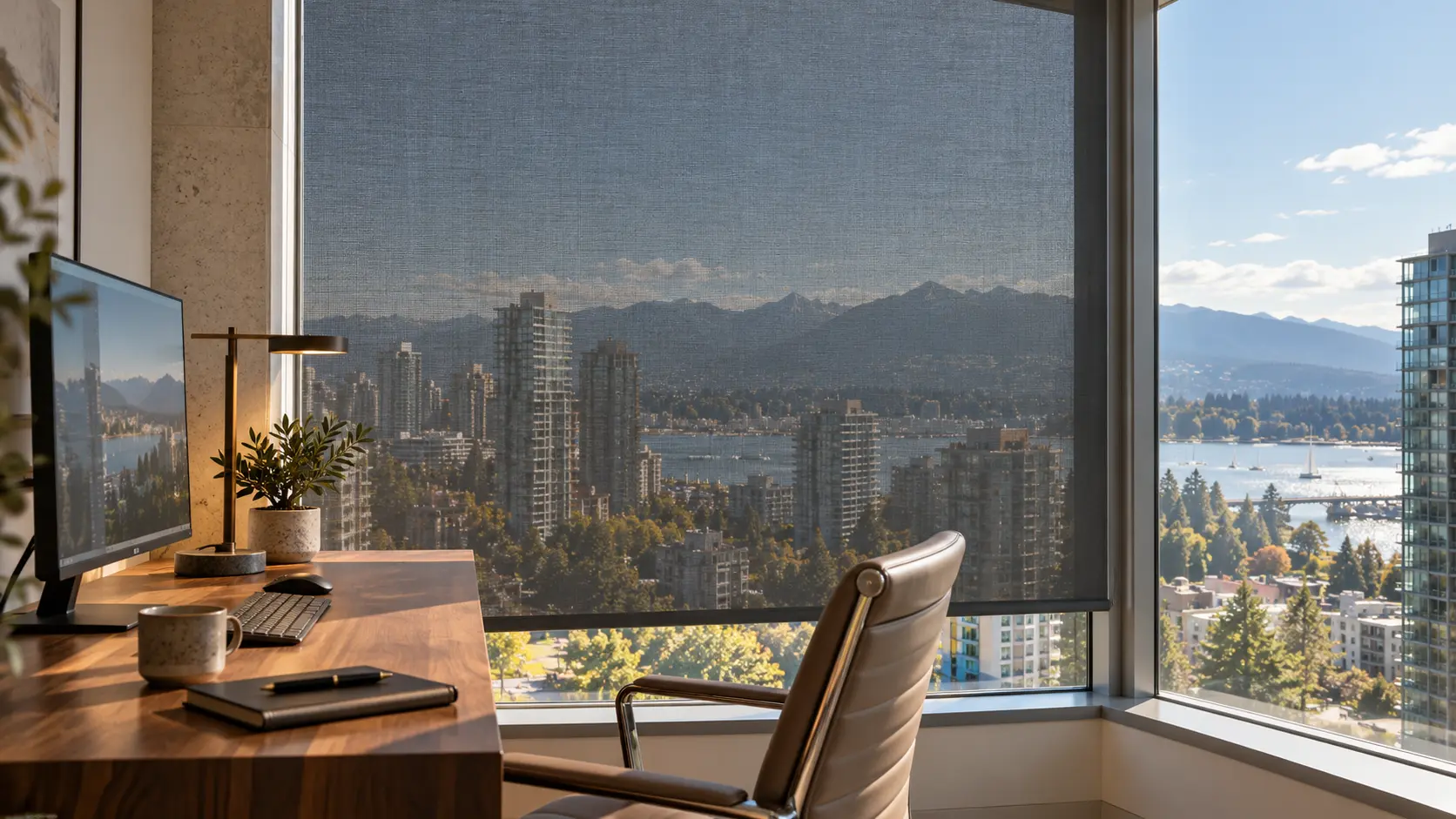
Floor-to-ceiling windows are a particularly appealing architectural feature in Vancouver condos, architecturally sophisticated residences. They frame water and mountains, but they can also make television screens challenging to view comfortably and home offices uncomfortable. The solution is not necessarily unnecessarily darkened interiors or permanently closed blinds. Reducing glare while protecting the view requires understanding changing sunlight patterns, window orientation, fabric openness, and how you use each space.
Why Does Glare Happen in Vancouver Condos?
Glare occurs when bright light contrasts sharply with darker surroundings or reflects from surfaces such as monitors, polished countertops, and glass tables. Expansive architectural windows amplify these differences, when sunlight strikes a screen.
Window orientation matters considerably. East-facing condos receive morning sunlight, while west-facing units may experience challenging late-afternoon sunlight. South-facing glazing can receive substantial winter sunshine, although overhangs may shade it during summer. Neighbouring towers, balconies, and reflective façades change the pattern from one individual apartment to another.
Which Window Coverings Preserve the View?
Solar Roller Shades
Solar roller shades are often the most practical and adaptable starting point. Their woven screen fabrics reduce incoming brightness while allowing meaningful outward visibility during daylight. Unlike opaque blinds, they can soften a bright skyline without unnecessarily obscuring the surrounding scenery.
Fabric openness describes the approximate proportion of open space in the weave. A one percent fabric generally provides stronger screening and less visibility than a five percent fabric, but openness alone does not establish glare reduction, heat performance, or privacy.
Dark screen fabrics often provide a clearer outward view in daylight because they reduce distracting reflections on the fabric. Light fabrics can appear brighter and may reflect more sunlight, depending on construction.
Adjustable Venetian Blinds
Horizontal slats let you redirect direct sunlight towards the ceiling while keeping part of the window visually open. They are especially useful when glare changes quickly during the day. However, slats interrupt the panorama, even when tilted carefully.
Sheer Curtains and Layered Treatments
Sheer curtains diffuse daylight and soften beautifully appointed rooms, but their fabric can blur detailed views. A layered arrangement, such as solar shades paired with decorative drapery, offers more flexibility.
How to Choose Solar Shade Openness
There is no universally ideal percentage for every Vancouver condo. Start with the room’s actual exposure and the activities taking place near the window.
| Fabric openness | Typical trade-off | Consider for |
|---|---|---|
| 1% | Stronger screening, reduced view clarity | Intense glare or sensitive workspaces |
| 3% | Balance of filtering and visibility | Bright living rooms |
| 5% | Clearer daytime view, more incoming light | Moderate exposure and scenic windows |
| 10% | Greater visibility, less screening | Mild glare where views dominate |
These are general comparisons, not guaranteed performance ratings. Request product-specific optical data and inspect samples at the time glare usually occurs.
Can You Reduce Screen Glare Without Closing the Blinds?
Yes. Start by repositioning the screen so the window is beside your workstation rather than directly behind the monitor or in your line of sight. Adjust screen brightness to suit ambient conditions, and use a matte display or suitable antiglare filter if necessary.
A floor lamp or balanced task lighting can also reduce the contrast between a bright window and a dark workspace. These changes may allow you to keep shades raised longer.
If relocation is impossible, a discreet solar shade may provide the most consistent improvement.
What About Privacy After Sunset?
A solar screen that preserves daytime views does not guarantee privacy at night. When indoor lights are brighter than outdoors, people outside may see into the room. This is especially relevant in dense Vancouver neighbourhoods where neighbouring buildings face each other.
Consider a dual roller system with a solar fabric for daytime glare and a separate privacy or room-darkening layer for evenings. Review the mounting depth, stacking space, and side gaps before ordering.
Will Glare-Control Blinds Reduce Heat and UV?
Some screen fabrics can reduce solar gain and ultraviolet exposure, but performance varies significantly. Interior shades generally stop sunlight after it passes through the glazing, whereas suitable exterior shading intercepts it earlier.
Ask for documented specifications for the exact fabric and colour, rather than relying on broad claims about cooling or furniture protection.
Condo Installation Considerations
Before installation, measure each window accurately, including frame depth and obstructions. Confirm whether your strata has restrictions affecting attachments to common property or window assemblies. Avoid drilling into glazing systems without appropriate authorization.
Review power supply, maintenance access, control compatibility, and applicable Canadian cord-safety requirements. A professional installer can help identify mounting options that preserve clean architectural lines.
Frequently Asked Questions
Do Solar Shades Block the View?
They soften it rather than necessarily blocking it. View clarity depends on openness, fabric colour, daylight conditions, and whether the shade is lowered.
Are Window Films Better Than Blinds?
Films may reduce certain types of solar transmission, but they provide less adjustable control. Some installations also require strata approval and compatibility checks with existing glazing.
What Works Best for a Condo Home Office?
A properly selected solar shade, thoughtful desk placement, and balanced task lighting often work well together. Test samples against your actual screen before committing.
For especially expansive glazing, consider ordering several fabric samples and checking their appearance during morning, midday, and evening conditions. This simple comparison can reveal differences that showroom lighting and product photographs rarely communicate accurately.
Keep the Light, Control the Glare
Choosing the right window coverings can make a significant difference in how comfortable your condo feels throughout the day. For homeowners exploring Blinds in Vancouver, professionally fitted solar shades offer a practical way to reduce glare while maintaining natural daylight and outdoor views. Selecting the right fabric openness, colour, and installation style helps create a balanced living space without compromising the beauty of Vancouver’s scenery.
The best approach combines adjustable shading with sensible furniture placement. For many Vancouver condos, solar roller shades offer a strong balance of daytime view preservation and brightness control, while layered treatments provide evening privacy. Evaluate fabric samples in your space, confirm installation constraints, and prioritize the moments when glare disrupts everyday life. Your windows should remain an asset, not something you feel compelled to cover.