
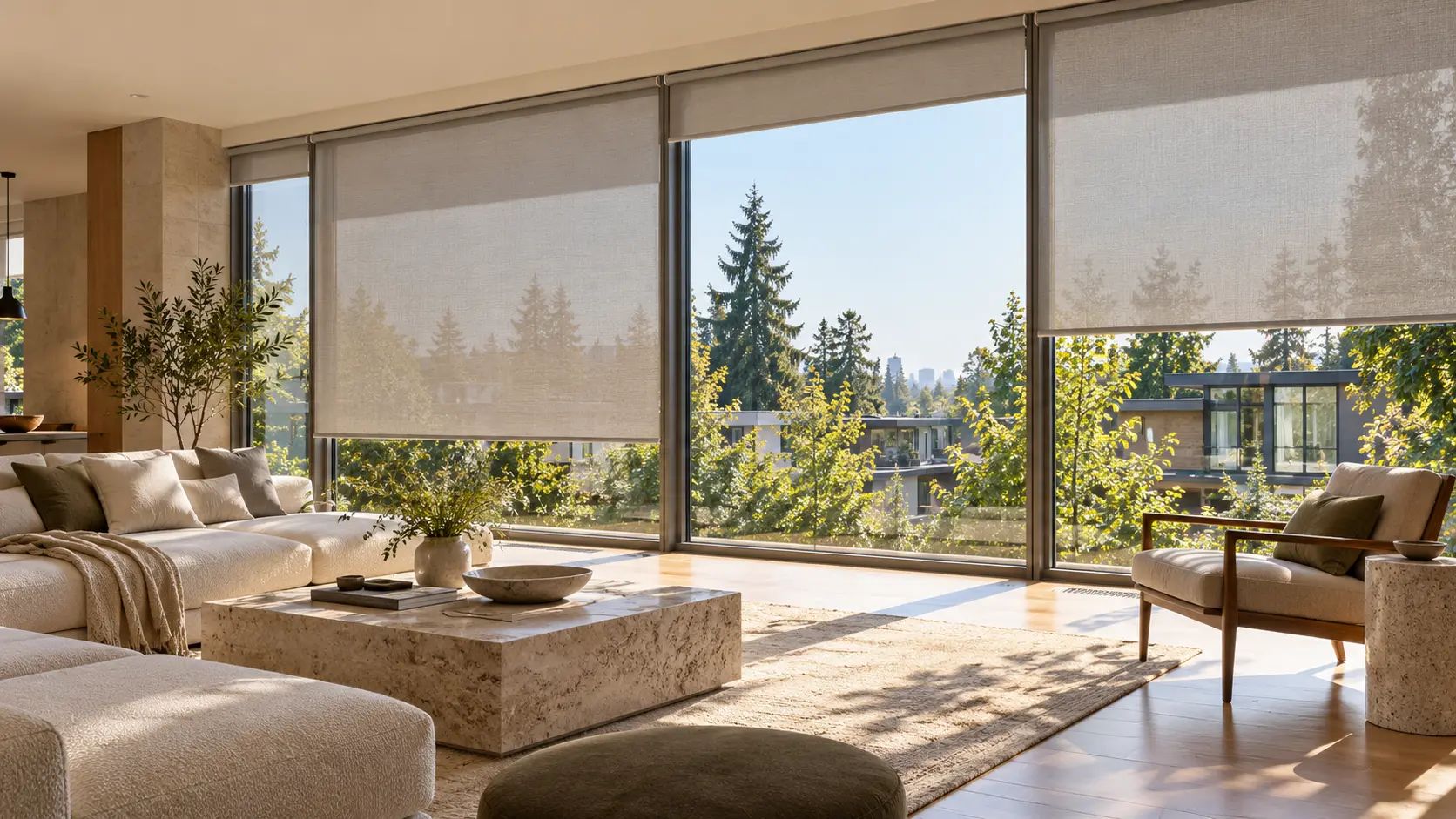
South-facing windows can make Vancouver residential living rooms feel bright and welcoming. Yet sunlight also brings screen glare, faded furnishings, and occasional overheating. The best blinds balance daylight, privacy, comfort, and the view outside. Rather than choosing the darkest fabric available, start by considering how sunlight enters your particular room.
Why South-Facing Windows Need Thoughtful Shading
In Vancouver, south-facing glazing receives valuable low-angle winter sunshine. During summer, the sun travels higher, so roof overhangs may block much of its direct midday light. Actual exposure depends on nearby buildings, trees, balconies, and window dimensions. West-facing glass can create more severe late-afternoon overheating, so do not assume every warm room has the same problem.
For southern windows, flexible control matters. You may want winter sunshine during breakfast, reduced glare while working, and privacy after dark. One permanently closed covering rarely handles all three comfortably.
Which Blind Types Work Best?
Solar Roller Shades: Best for Daytime Glare
Solar roller shades use woven screen fabric to soften direct light while retaining some outward visibility. They suit contemporary Vancouver-area condominiums, open-plan living spaces, and rooms with attractive views. Fabric openness matters: a lower openness percentage generally blocks more light and offers less daytime visibility through the material.
However, solar shades do not provide dependable nighttime privacy when interior lights are on. Their performance also depends on fabric colour, reflectance, and glazing. Ask to see physical samples rather than selecting solely from online photographs.
Cellular Shades: Best for Added Insulation
Cellular, or honeycomb, shades trap air within structured pockets. Properly fitted models can improve thermal comfort by reducing heat transfer at windows. This makes them appealing for Vancouver’s cooler seasons.
Light-filtering fabrics preserve a softer glow; blackout versions suit sleeping areas. Side gaps, mounting depth, and installation quality affect real-world performance. Cellular shades can obscure views when lowered, so they may be less appealing where scenery is the priority.
Venetian Blinds: Best for Adjustable Light Direction
Horizontal slats let you redirect sunlight without covering the entire window. Tilt them to reduce glare on televisions or computer monitors while admitting indirect daylight. Aluminium blinds offer a clean, practical appearance, while suitable faux-wood finishes create a warmer aesthetic.
Real timber blinds need careful consideration in damp environments. Slats also require occasional dusting.
Dual Roller Shades: Best for Changing Priorities
A dual system combines two independently operated layers, commonly a solar screen and a room-darkening shade. Use the screen during bright afternoons, then lower the second layer when privacy or reduced light becomes more important.
This arrangement offers versatility. Nevertheless, two rollers need sufficient mounting space, and side gaps can remain visible. For complete darkness, ask about appropriate side channels and installation details.
Quick Comparison for South-Facing Rooms
| Window covering | Main advantage | Main limitation |
|---|---|---|
| Solar roller | Glare control with partial views | Limited nighttime privacy |
| Cellular | Added window insulation | View blocked when lowered |
| Venetian | Precise slat adjustment | More cleaning required |
| Dual roller | Daytime and evening flexibility | More mounting space needed |
How Much UV Protection Do Blinds Provide?
Sunlight can contribute to fading in flooring, upholstery, and artwork. Many shade fabrics are marketed with ultraviolet blocking figures, but these vary by material, openness, and colour. Request manufacturer documentation for the exact product rather than assuming every solar shade provides identical protection.
Remember that existing window glazing may already filter some ultraviolet radiation. Blinds add another layer of control, but no interior covering should be presented as a guarantee against fading.
Should You Choose Light or Dark Fabrics?
Light-coloured materials can reflect more incoming sunlight, depending on their backing and construction. Darker screen fabrics sometimes provide a clearer outward view because they reduce internal reflections. Neither rule applies equally to every product.
For south-facing Vancouver windows, compare samples at midday and later in the afternoon. Check how the fabric looks from inside and outside. Consider photographing samples at different conditions to compare glare, colour, privacy, and daylight accurately. A shade that looks elegant in a showroom can behave differently beside your own glazing.
Are Motorized Blinds Worth Considering?
Motorized blinds can help manage tall windows, difficult-to-reach glazing, and changing daylight. Timed schedules may encourage consistent use, but they cannot automatically guarantee energy savings. Smart controls, power sources, service access, and compatibility should be reviewed.
For households with children, cordless or appropriately designed motorized options also help avoid accessible operating cords. Follow current Canadian window-covering safety requirements.
What About Condensation and Vancouver’s Climate?
Interior coverings can change airflow near glass. During cold weather, tightly closed blinds may leave window surfaces cooler, potentially worsening condensation where indoor humidity is high. Monitor moisture, maintain appropriate ventilation, and address persistent condensation.
In apartments, also check strata rules before adding exterior shading or modifying window assemblies. Interior blind choices are usually simpler, but installation should not damage frames or interfere with window operation.
Frequently Asked Questions
Are Blackout Blinds Necessary for South-Facing Windows?
Not always. Choose blackout materials when sleep or strong light exclusion matters. Living areas often benefit more from adjustable, light-filtering control.
Can Solar Shades Keep a Room Cool?
They can reduce glare and some solar gain, but exterior shading generally intercepts more heat before it enters through glass. Results depend on the entire window system.
Which Blinds Preserve the Best View?
Solar roller fabrics often preserve a partial daytime view. Compare openness, lighting conditions, and the privacy trade-off before choosing for your particular household.
Choosing Blinds That Fit Your Home
The best blinds for Vancouver homes with south-facing windows depend on room use, exposure, privacy needs, and existing glazing. Prioritize solar rollers for daytime glare, cellular shades for insulation, Venetian blinds for directional control, or dual rollers for flexibility. Before ordering, measure meticulously and compare real samples in the space. Thoughtful window treatments should make the room easier to live in without sacrificing the daylight that makes southern exposure appealing.
Choosing the right window coverings is about more than controlling sunlight. For homeowners exploring Blinds in Vancouver, factors such as window orientation, fabric performance, privacy, and interior design all influence the final choice. Professionally selected and fitted blinds can help create a more comfortable living environment while complementing the natural light and architectural character of Vancouver homes.