
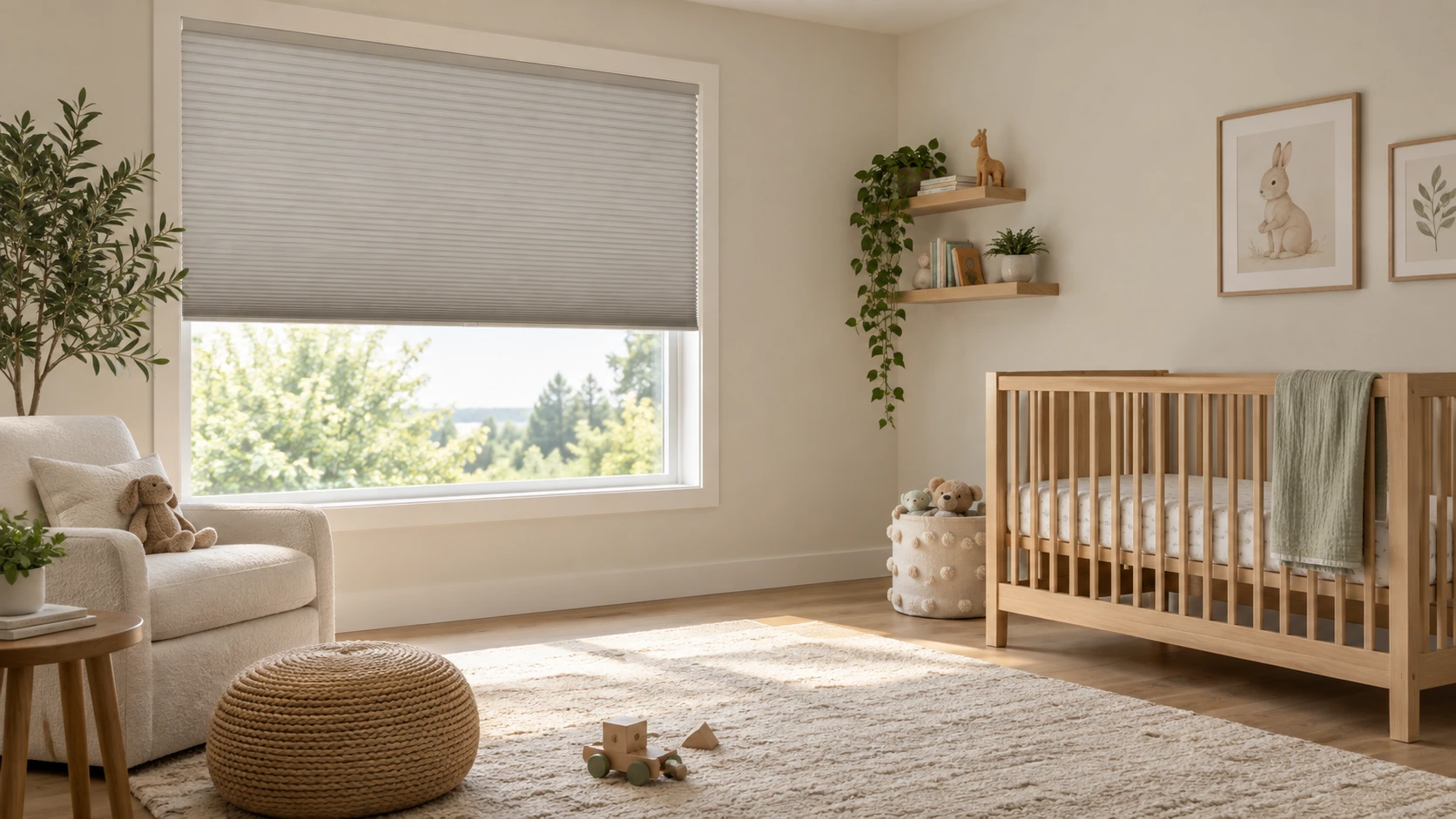
Choosing window coverings for a nursery is about more than matching the room décor. The right option can help control daylight, reduce glare, improve privacy, and create a calmer environment for naps and bedtime.
For many parents, the main priorities are simple: effective light control, child safety, easy operation, and a style that works with the rest of the room.
Here are the most important things to consider when choosing the best window coverings for a nursery.
Why Light Control Matters in a Nursery
Nurseries often need more flexible light control than other rooms in the home.
During the day, you may want soft natural light without making the room too bright. Around nap time or bedtime, you may prefer a darker environment.
This is where the type of fabric and window covering makes a noticeable difference.
Light-filtering materials can soften daylight while still allowing some brightness into the room, while blackout or room-darkening fabrics are designed to block significantly more light.
Are Blackout Window Coverings a Good Choice?
Blackout window coverings are a popular choice for nurseries because they can help create a darker room during daytime naps and early summer evenings.
They may also be useful in rooms with:
- Large windows
- Strong afternoon sun
- Bright neighboring buildings
- Streetlights outside the window
However, blackout does not always mean the room will be completely dark.
Small amounts of light can still enter around the edges of some blinds or shades. The fit, mounting style, fabric and window size all affect the final result.
For stronger room darkening, custom window coverings can be measured more closely to the window.
Safety Should Be a Priority
Safety is especially important when choosing window coverings for a nursery.
Health Canada advises that window coverings with long accessible cords can create a strangulation risk for young children. It recommends replacing products with long accessible cords and identifies window coverings without long accessible cords as the safer option.
For nurseries, it is also important to keep cribs, beds, playpens and climbable furniture away from windows where a child could reach a cord.
When selecting new window coverings, ask about cordless or child-conscious operating options.
Roller Shades for Nurseries
Roller shades are one of the most practical choices for a nursery.
They have a clean appearance and are available in a wide range of fabrics, including light-filtering and room-darkening options.
They may suit parents who want:
- A simple design
- Blackout fabric options
- Straightforward light control
- Easy integration with modern interiors
A custom roller shade can also be selected according to the amount of daylight entering the room.
Cellular or Honeycomb Shades
Honeycomb shades are another option worth considering.
Their structured design provides a soft, finished appearance and can offer useful control over light and privacy.
Depending on the fabric selected, they can range from light-filtering to darker room treatments.
They may work especially well in nurseries where homeowners want a softer look than a traditional blind.
Motorized Window Coverings
Motorization can also be useful in a nursery.
A motorized shade allows the window covering to be adjusted without manually operating the blind or shade at the window.
This may be particularly convenient when holding a baby, preparing the room for bedtime, or managing hard-to-reach windows.
Motorized systems can also reduce the need for accessible operating cords, depending on the product and installation.
Light-Filtering or Blackout: Which Is Better?
There is no single answer for every nursery.
Choose light-filtering window coverings if you want to soften daylight while keeping the room bright during the day.
Choose blackout or room-darkening window coverings if reducing outside light during naps and bedtime is a higher priority.
Some homeowners may also combine different window treatments to get more flexibility throughout the day.
Should Nursery Window Coverings Be Custom Made?
Custom window coverings can be helpful when the nursery has unusual window dimensions, strong light exposure, or specific privacy requirements.
A custom fit may also reduce larger gaps around the window covering and give the room a more finished appearance.
The best solution depends on the window, room layout and level of light control you want.
Choosing the Right Nursery Window Covering
The best nursery window coverings should balance several factors:
- child-conscious operation
- effective light control
- privacy
- ease of use
- suitable fabric
- a good fit for the window
- a style that works with the room
At Lux Blinds, homeowners can explore nursery window covering solutions in Vancouver based on their room, window size and preferred level of light control.
A professional consultation can also help determine whether roller shades, blackout fabrics, motorization or another option is better suited to the space.
Blackout roller shades, honeycomb shades and other cordless or child-conscious window coverings are common options. The best choice depends on the amount of daylight, window size and level of darkness you want.
Long accessible cords can create a serious safety risk for young children. Health Canada recommends window coverings without long accessible cords and advises keeping cribs and furniture away from windows with accessible cords.
Blackout is better when a darker room is the priority. Light-filtering shades are better when you want privacy and softer natural daylight without making the nursery too dark.