
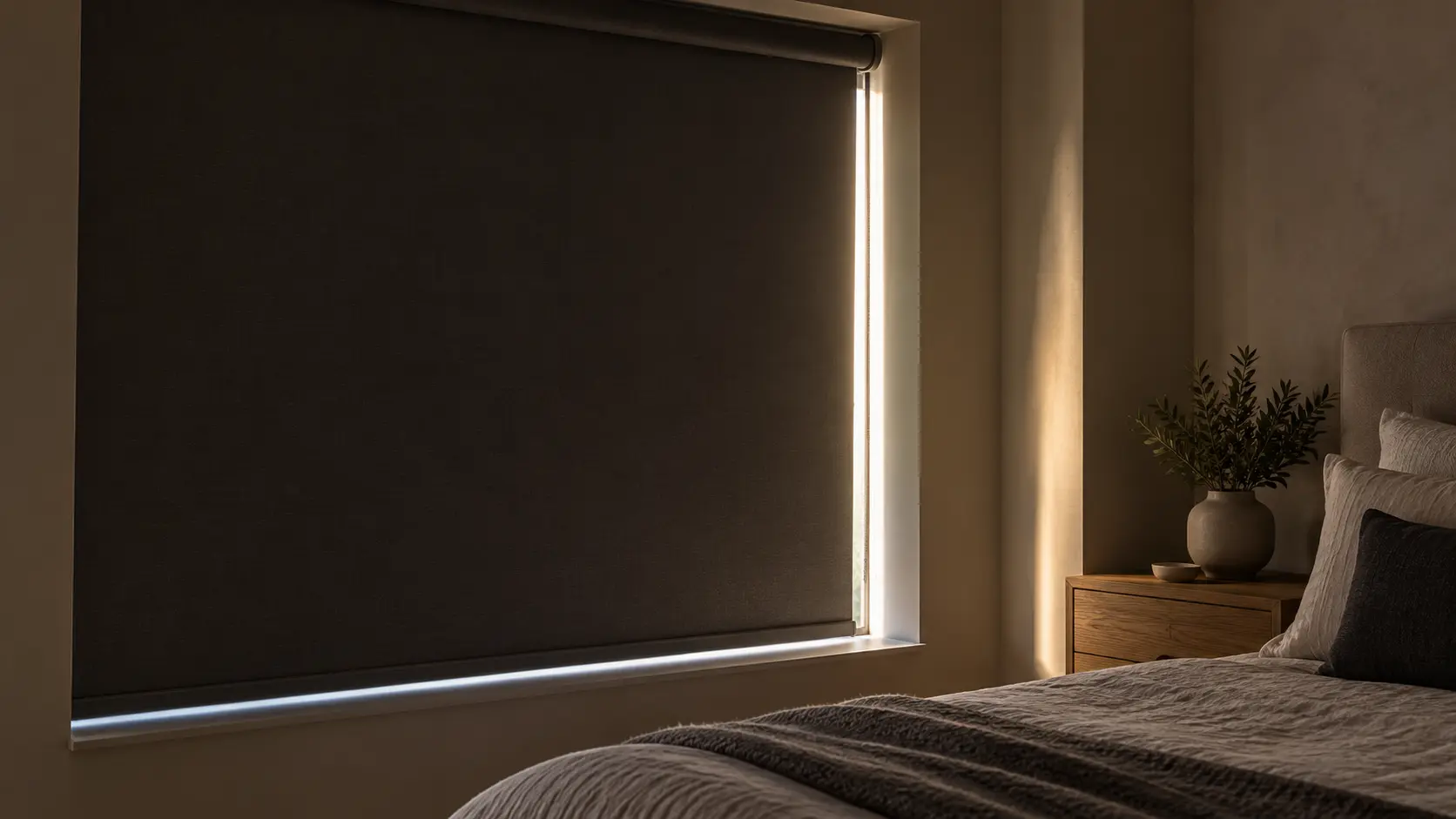
You install blackout blinds expecting a comfortably darkened bedroom, then notice conspicuous strips around the window at sunrise. The fabric may be doing its job perfectly. Most unwanted light enters through gaps beside, above, or below the covering, not through the blackout material itself. For Vancouver homeowners, understanding those gaps is the first step toward better sleep conditions without purchasing an unsuitable replacement product.
Blackout Fabric Is Not the Same as a Blackout Installation
Blackout describes a fabric designed to prevent light from passing through its surface. It does not mean the entire window assembly becomes lightproof. Even an opaque roller shade needs clearance to move freely, and that clearance can leave conspicuously visible lines of daylight.
Room-darkening fabrics are different. They reduce incoming light but may still transmit a noticeable glow. Check the manufacturer’s fabric classification before deciding whether your problem is the material or the installation.
Where Does the Light Actually Enter?
Side Gaps Around Roller Shades
A roller shade’s fabric is usually narrower than its overall bracket-to-bracket width. This allows space for the operating mechanism and prevents the material from rubbing against the frame. With an inside mount, the resulting side clearance gaps can become especially obvious when sunlight shines directly toward the window.
A relatively narrow illuminated strip can look surprisingly bright against an otherwise dark room because your eyes adapt to the lower interior light level.
Light Above the Roller
Depending on the system, unwanted daylight can pass around an exposed roller or between the shade and the top of the window opening. A properly specified cassette or fascia may conceal the mechanism and reduce this gap. However, a decorative cover alone does not necessarily seal every opening.
Gaps at the Bottom
Uneven window sills, projecting handles, baseboards, or a shade that stops slightly short can leave light visible below the bottom rail. Check whether the blackout fabric hangs straight and whether an obstruction prevents it from reaching its intended position.
Inside Mount vs Outside Mount: Which Blocks More Light?
An inside-mounted blind sits within the window recess. It creates a refined, architecturally integrated aesthetic and preserves surrounding wall space, but the fabric must fit inside the opening. Side clearance is therefore difficult to eliminate entirely. This matters during professional installation planning.
An outside-mounted blind extends beyond the window opening. Extra overlap can cover more of the daylight escaping around the frame, particularly when the shade is mounted above the trim. Results depend on window geometry and nearby architectural obstructions.
Neither method guarantees total darkness. For example, a poorly positioned outside mount may still let light enter behind the fabric. Accurate measurements and considered overlap matter more than the label alone.
What Are the Most Effective Ways to Reduce Light Gaps?
Add side channels. Compatible channels guide or surround the shade edges, limiting light entering from the sides. They can be useful for bedrooms, media rooms, and shift workers. Check manufacturer-specific installation compatibility before retrofitting.
Choose an enclosed cassette. A suitable headbox can reduce light infiltration around the top of a roller shade and create a visually cohesive finished appearance. Ask whether the design includes light-control features or merely hides hardware.
Increase outside-mount overlap. Extending the shade beyond the opening can help cover edge gaps. Confirm that the additional fabric width does not interfere with doors, furniture, switches, or adjacent windows.
Layer with curtains. Properly positioned blackout drapery can cover remaining gaps while adding softness to the room. A wraparound track or thoughtful return at the wall can improve coverage, although fabric folds may still admit some light.
Address the bottom edge. Adjustments to shade length, mounting position, or compatible bottom details may help. Avoid improvised attachments that could interfere with reliable and safe everyday operation.
What About Honeycomb and Other Blackout Shades?
Blackout cellular shades may offer different edge-clearance characteristics from roller shades, depending on their hardware and mounting design. Some systems offer tracks or other light-control accessories. Their insulating construction is another consideration, but it does not automatically solve every light gap.
Roman shades and other fabric treatments can also provide room darkening, yet folds, mounting clearance, and side returns influence the result. Compare complete systems, not simply fabric swatches.
Vancouver Considerations: Condos, Bedrooms, and Summer Mornings
Vancouver’s extended summer daylight hours can make small gaps noticeable during early mornings and late evenings. In condos, large glazing panels and shallow window recesses may limit the mounting options available. Window handles, ventilation openings, and strata requirements can introduce further constraints.
Before drilling, confirm whether the proposed installation affects a window assembly or other element subject to strata rules. Keep coverings clear of required ventilation and window operation. For children’s rooms, select products that comply with applicable Canadian cord-safety requirements.
Frequently Asked Questions
Will Wider Blackout Fabric Fix the Problem?
Sometimes, but not always. A wider outside-mounted shade may improve overlap. Inside a recess, oversized fabric can rub against the frame or prevent smooth operation. Measurements must account for the entire mechanism.
Can Existing Roller Blinds Be Made Completely Blackout?
Some systems can accept compatible cassettes or side channels, but others cannot. Even upgraded assemblies may leave some residual light leakage. Ask an installer to assess the specific hardware before purchasing accessories.
Are Blackout Blinds Worth It for a Nursery?
They can help create a darker environment for naps, provided the installation is safe and the room remains appropriately ventilated.
Choose the Whole System, Not Just the Fabric
The most effective approach starts by locating the light: sides, top, bottom, or through the material. Then compare mounting options, overlap, cassettes, side channels, and layered treatments against your actual window. For homeowners researching Blinds in Vancouver, a professional, window-specific assessment and comprehensive product consultation can help identify realistic, technically appropriate improvements before ordering. A well designed blackout installation should reduce distracting daylight while remaining safe, functional, and aesthetically appropriate for your home.