
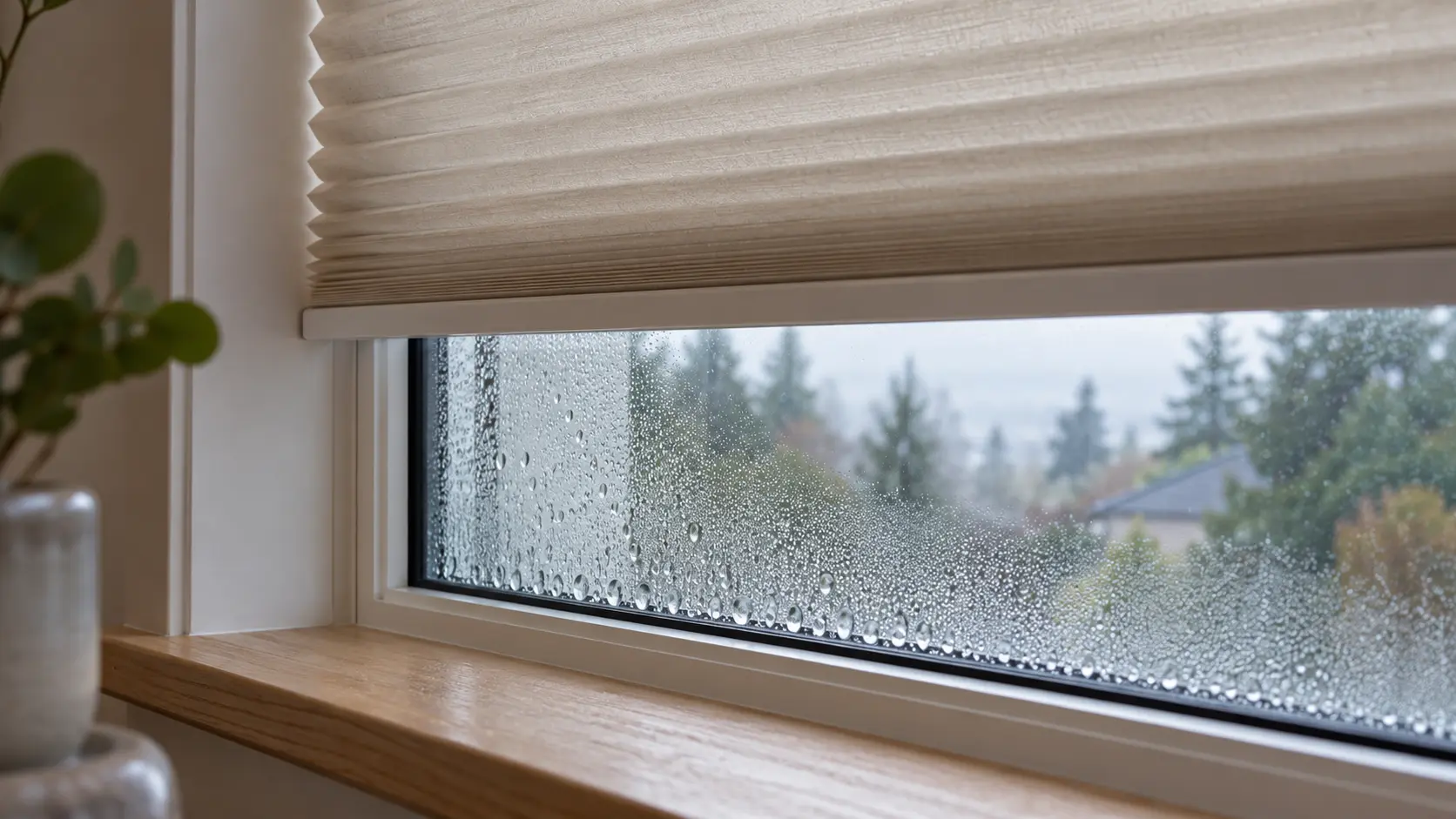
You open your blinds on a chilly Vancouver morning and discover droplets collecting on the glass. Perhaps the sill feels damp, or moisture appears only after the shades have stayed closed overnight. Condensation behind window blinds is common in some homes, but it deserves attention. The problem usually involves indoor humidity, cold window surfaces, and limited airflow, rather than a defective blind. Understanding that interaction helps you protect your windows, finishes, and living space without giving up privacy.
What Causes Condensation Behind Blinds?
Condensation forms when moist indoor air meets a surface cold enough for water vapour to become liquid. In winter, window glass and frames can be substantially cooler than the room. Cooking, showers, laundry, houseplants, and everyday occupancy all contribute moisture indoors.
Closed blinds can create a pocket of air between the covering and the glass. That pocket may receive less warmth and circulation from the room, allowing the glass to stay colder. When humid air reaches it, droplets can appear. Blinds do not create water by themselves, and removing them is rarely a complete solution.
Why Vancouver Homes Notice It in Cooler Months
Metro Vancouver’s wet weather makes moisture management feel especially relevant, but outdoor rain is not automatically the source of droplets on the interior glass. Cool temperatures, indoor humidity, ventilation habits, and window performance are more direct factors.
Condensation may be noticeable in bedrooms after a night with closed doors and shades, when several people sleep in the space. Older glazing, metal frames, and thermal bridges can leave colder surfaces. Even newer windows can experience condensation when indoor moisture levels are high enough.
How Different Window Coverings Affect Airflow
Roller Shades
Roller shades hang close to the window and provide a clean appearance. When fully lowered, particularly inside deep recess, they can restrict the movement of warm room air across the glass. The effect depends on mounting distance, window dimensions, and the surrounding construction.
Honeycomb Shades
Cellular or honeycomb shades can reduce heat transfer through a window, improving comfort. However, insulating the room from cold glass can also leave the glass itself cooler. In humid conditions, moisture may accumulate behind a tightly fitted shade. This is not proof that cellular shades are unsuitable; it means humidity and ventilation still matter.
Venetian Blinds and Curtains
Adjustable slats may allow more airflow when tilted open. Heavy curtains can create a relatively isolated air space when drawn tightly across a window. No product category guarantees condensation prevention, because the window assembly and indoor conditions influence the result.
How to Tell Condensation From a Window Leak
Interior condensation typically appears as droplets or mist on the room-facing surface of glass, often during cold weather. It may lessen after ventilation or when the window warms.
Moisture between sealed panes is different. Fogging trapped inside an insulated glass unit may indicate a failed seal and generally requires assessment by a window professional. Water entering around the frame during rain, staining within walls, or persistent wet building materials may suggest leakage or another building-envelope problem.
Do not assume every damp sill is caused by blinds. If moisture persists, spreads, or appears inside the wall, arrange an appropriate professional inspection.
Practical Ways to Reduce Moisture Behind Blinds
Measure indoor humidity. A hygrometer helps reveal whether moisture rises overnight or after cooking. Appropriate targets vary with outdoor temperature and window performance; avoid relying on one universal percentage.
Use ventilation consistently. Run kitchen and bathroom exhaust fans when producing moisture, provided they vent outdoors and operate correctly. Follow your building’s ventilation guidance, and address malfunctioning equipment.
Allow windows to dry. Open blinds periodically when practical so room air can circulate near the glazing. Wipe visible droplets promptly with clean cloth, especially along painted or wooden sills.
Check for blocked airflow. Furniture, deep window recesses, and tightly closed coverings may restrict circulation. Discuss mounting clearances with an installer rather than adding improvised spacers or altering hardware.
Investigate persistent sources. Plumbing leaks, unusually high humidity, or inadequate ventilation need attention beyond changing window coverings. Avoid treating recurring dampness as merely cosmetic.
Inspect the lower corners of windows after particularly chilly nights. Look for peeling paint, swollen trim, or recurring water marks. Record when moisture appears and whether ventilation changes improve it. These observations can help identify patterns before damage develops. Document moisture patterns for professional assessments.
Can Better Blinds Solve the Problem?
The right window covering can help balance comfort, privacy, and access to the glass, but it cannot repair failed glazing or remove excess moisture from a home. A professional can review whether an inside mount, outside mount, or different operating arrangement makes maintenance easier.
For Vancouver condos, confirm strata requirements before modifying window frames or shared building components. Window coverings should not obstruct required ventilation openings, emergency operation, or safe access to the window.
Frequently Asked Questions
Should I Leave My Blinds Open Overnight?
Not necessarily. Privacy and sleep needs matter. If condensation repeatedly forms overnight, try opening the covering during part of the day, checking humidity, and improving ventilation. Monitor whether those changes help.
Does Condensation Mean My Windows Need Replacing?
No. Surface condensation alone does not establish that a window is defective. Persistent fog between panes, damaged frames, or unexplained water intrusion deserves professional evaluation.
Can Condensation Cause Mould?
Repeated dampness can support mould growth on susceptible materials. Dry wet surfaces promptly and address the moisture source. Seek qualified help for extensive or recurring contamination.
Choose Window Coverings With Moisture in Mind
Condensation behind blinds is warning to examine the whole window environment, not simply the fabric. Start with humidity, ventilation, glass temperature, and how the covering fits. If you are comparing Blinds in Vancouver options, ask about practical access for cleaning, mounting clearances, and everyday operation alongside appearance. Thoughtful selection can complement a moisture-management plan, while persistent leaks or glazing problems should be assessed by the appropriate building professional.